Un Año Fantástico
Mar 4th, 2015 by willmarks
Here is a link to the story of our year in Barcelona, told through approximately 65 blogs, beginning in August 2013: Un Año Fantástico
An independent boutique publisher, founded in San Francisco in 1990.
Mar 4th, 2015 by willmarks
Here is a link to the story of our year in Barcelona, told through approximately 65 blogs, beginning in August 2013: Un Año Fantástico
Aug 26th, 2014 by willmarks
We are back in San Francisco, back to reality as we know it. Our United flight departed from SFO on August 16, 2013 and we returned on July 3, 2014. We are happy to be home, but just the same, we will miss Barcelona. What will we miss? It is a long list that includes lengthy lunches, small and tasty coffees, the challenge of speaking Spanish, not having a car, and the ease of travel to interesting places.
Max says he will miss having a park right outside the door and having his close friends all within a few blocks. He will miss a newfound independence, which partly came with age, but also with the safe territory. He will miss riding home from school on his scooter with pals, the lack of fog, and jamón ibérico. Max and I made many visits to Tutusaus, our local ham and cheese provider; I won’t miss the expensive price of this delicious ham, constantly reminding Max of this as he shoveled it into his mouth.
Ella will miss having her friends nearby, the beaches, and warm weather. She will long for paella, pan con tomate, and Isabellas, our neighborhood Italian restaurant, with the most wonderful steak (Tagliata de ternera con parmesano) and her beloved croquetas. She will miss our local bread shop, Macxi Pa, as well as Sushi Side. And, Barça fútbol will be in her heart; we all became fans, and will keep watch from abroad!
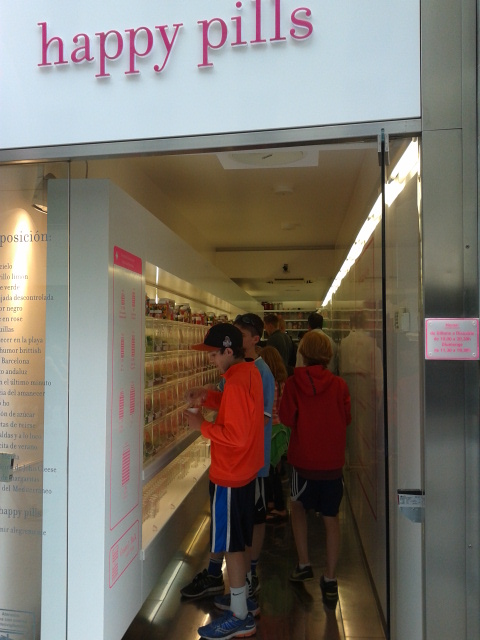
Maggie will miss Turo Park and her many new friends, as well as the Mediterranean Sea. She will miss pimientos de padrón, gorgonzola croquetas, patatas bravas, and of course Happy Pills, where one euro bought a substantial cone of candy. Maggie will miss the Spanish language, but we will do our best to keep moving forward in this regard.
Evelyn will miss the shorts and the longs. Short (small) coffee and short walk to Dylan’s (for food), and long lunches and long history that we couldn’t help but study while walking around Barcelona and other European cities. She says she will miss her rollercart and separate shopping for the various food categories, but this may all be sarcasm? She will indeed miss the Bicing system, as we were never more than a quarter mile from one of the 400+ stations, as well as the clean metro, and the effortlessness of moving through Barcelona, not to mention the ease of travel throughout Europe.
This does not leave much for me to add. Living without a car for a year was fantastic; I was a big fan of the Bicing system and the metro. I also took advantage of the Parc Natural de Collserola behind Barcelona (for fitness), which includes the Carretera de les Aigües (road of waters) and its gorgeous view of the city. I will miss the food, the history, the travel, and simply living in Spain for a year, and watching the impact of this experience on my family.
For about 10 years, I kept a quotation above my desk. It stared me in the face until I was forced to act. Life passes most people by while they’re making grand plans for it. I was determined not to let this happen. Full disclosure—the quotation came from the movie “Blow” and the character, George Jung, was trying to live life to its fullest, which for him meant as a drug dealer….For me, I had always wanted to live a year or more abroad, ever since I had made the mistake of not spending an extended period of time overseas after college. This desire, when combined with the constant reminder from those words in front of me on my desk, finally pushed me over the edge…and to Barcelona!
Some parting shots of what we will miss….
Barça futbol
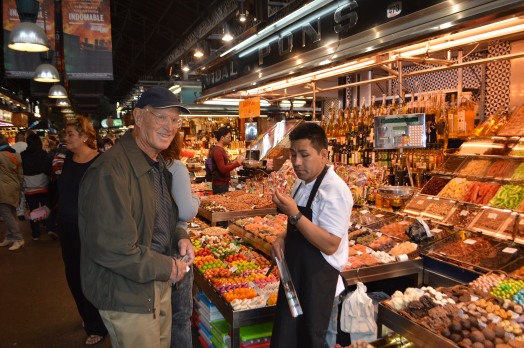
Dad, during his visit to the Boqueria
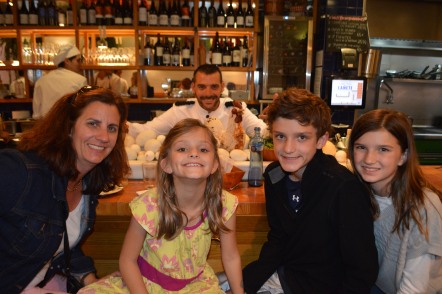
Dining out…
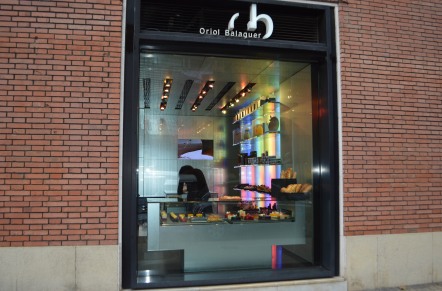
Chocolate croissants
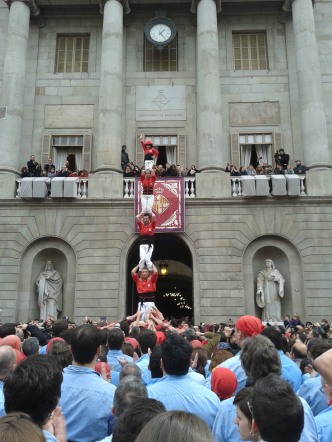
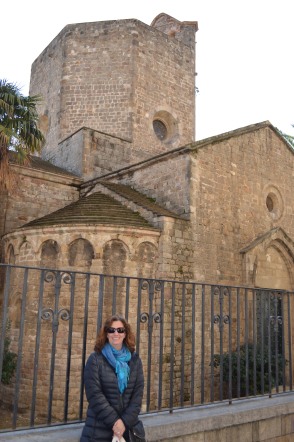
History and architecture, Sant Pau del Camp, oldest church in BCN (10th-12th century)……………………………………………………………….Castellers
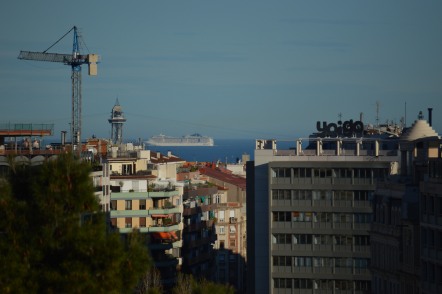
View from our deck
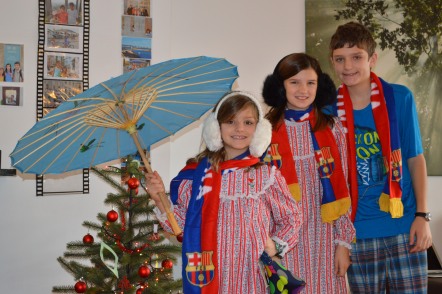
Holidays abroad
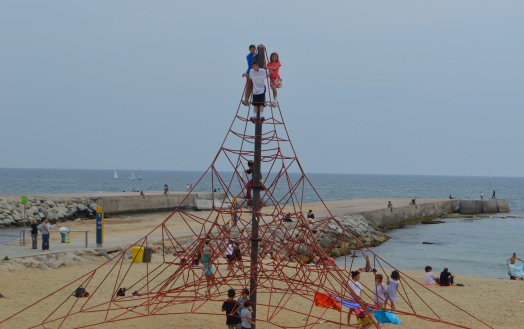
The beach
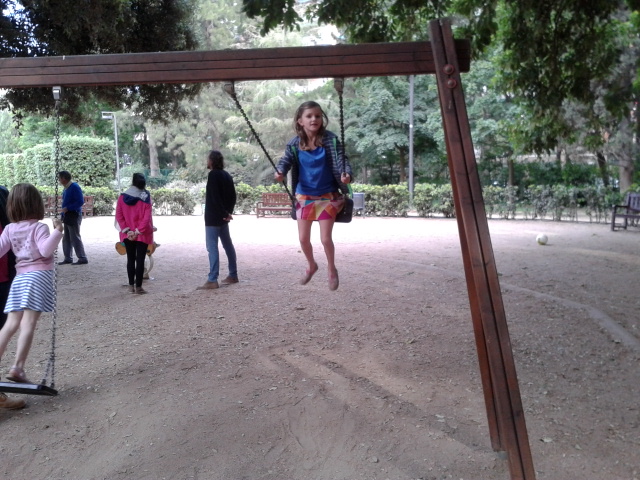
Across the street from home, in Turo Park
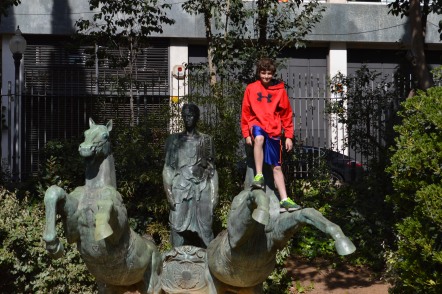
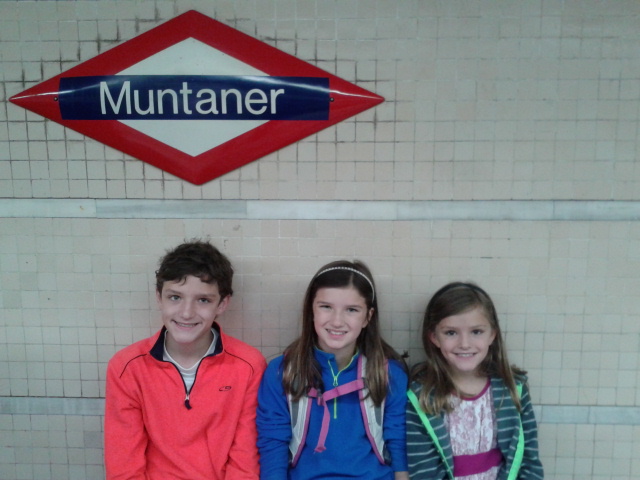
The Metro
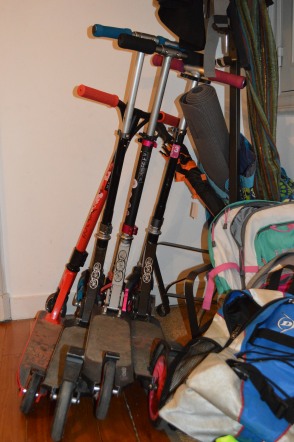
Happy Pills……………………………………….scooters
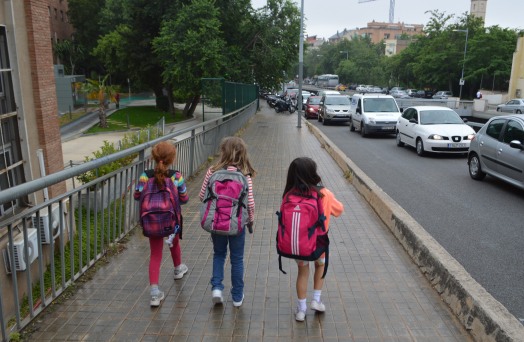
The path to and from BFIS (school)
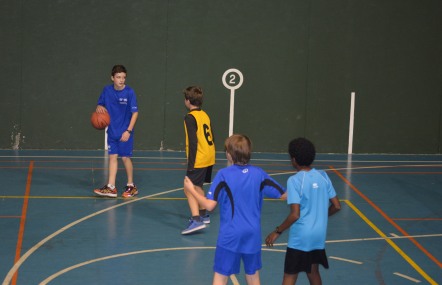
Basketball
Theater

Biking near Sagrada Familia
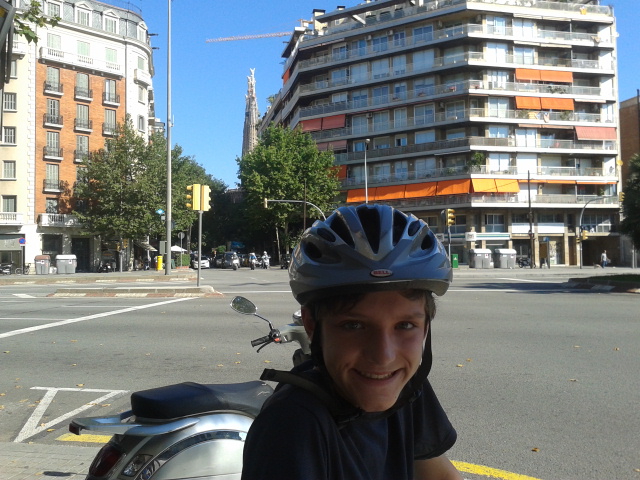
Goodbye Barcelona!
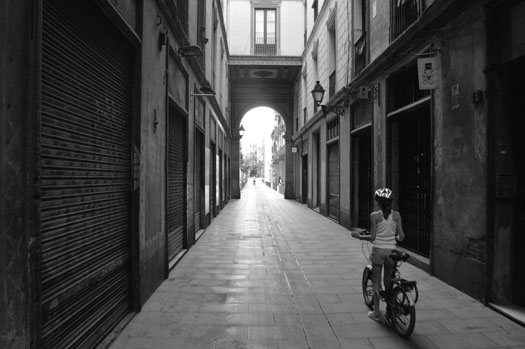
Adiós, Adéu (Catalan)…
While the year flew by, it was long enough to make some great friends, most of whom were expats like ourselves. Let’s start with our portero, José, in front of our building at Josep Bertrand 13. He spoke no English and while our Spanish progressed throughout the year, he could barely understand our parting words. 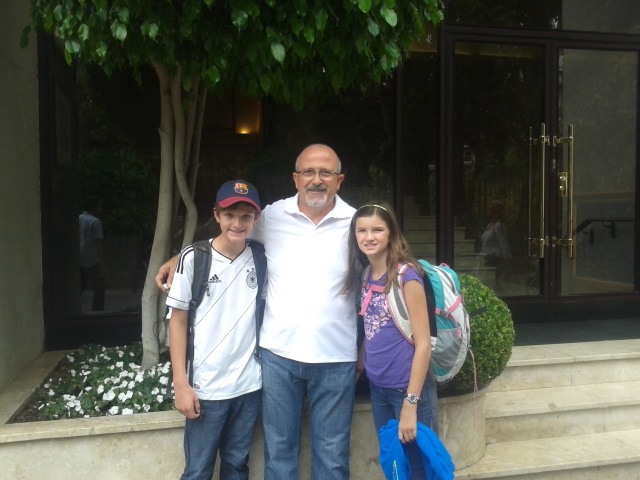
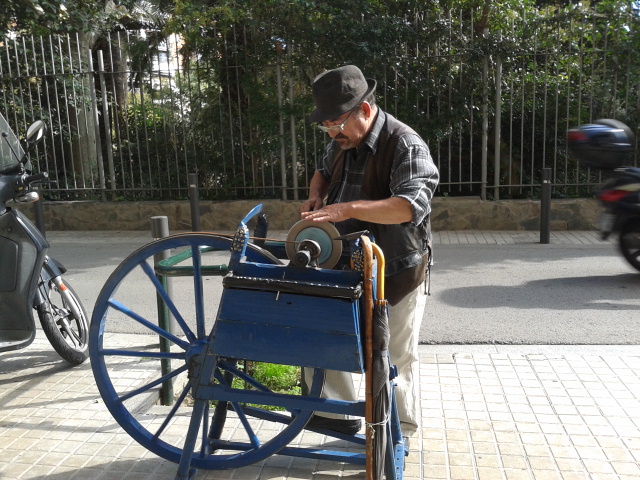
The local knife sharpener, Roberto.
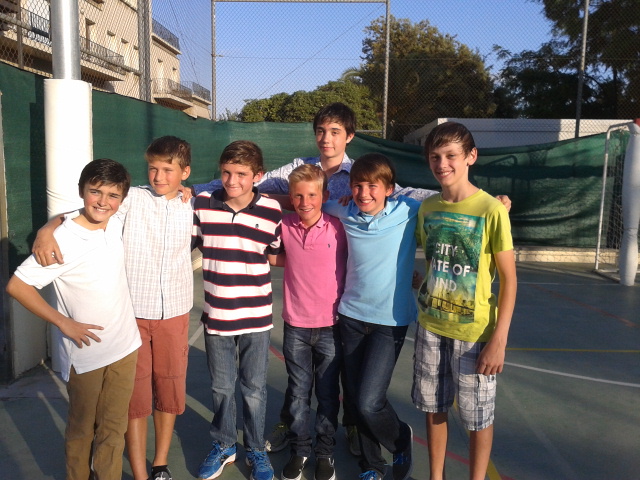
Joe Ziegler, Edu Alonso, Max, Ty Sullivan, Jacob Swift, Owen Worple, and Ezra MacConuladh
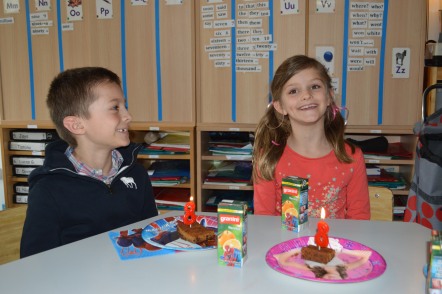
Maggie’s birthday, with Emilio Cadena at school.
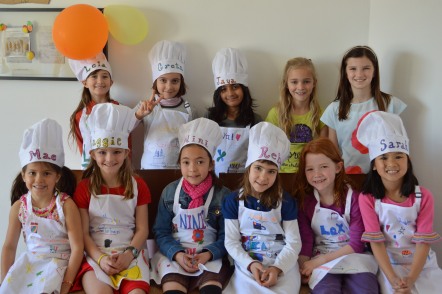
…and her party at home. Top: Leia Ryan, Greta Goedvolk, Jaya Dhariwal, Ella Nelson, Ella. Bottom: Mae Kunihiro, Maggie, _____, Rebeca Montero, Lexi Nelson, Sarah Wolfe.
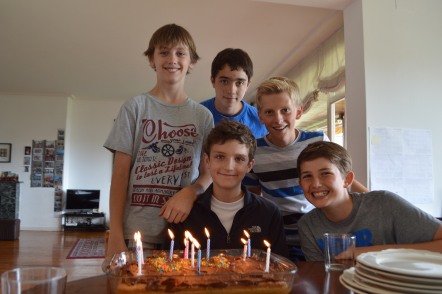
Max’s birthday. Ezra, Jacob, Ty, and Owen.
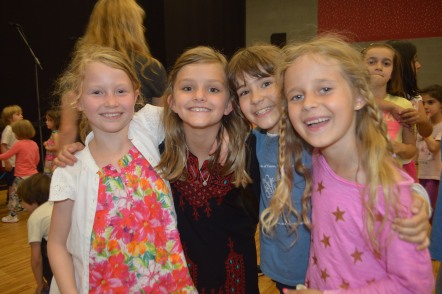
Maggie with her 2nd grade pals, Florien, Rebecca, and Tamina.
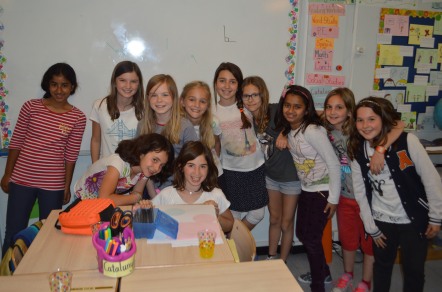
Ella with her 4th grade class, which was indeed coed.
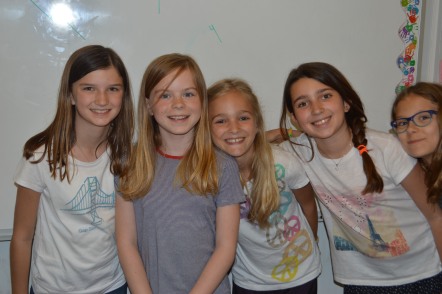
Ella, Marisa Niedzielska, Ella Nelson, Stella Goedvolk, Martina de Pablo
Ella’s birthday party, clockwise: Ella, Sophie Thiescheffer, Ella Nelson, Stella Goedvolk, Maggie, Marisa Niedzielska, Lisa Salvano, Lucia Barrett, Lily Swift. 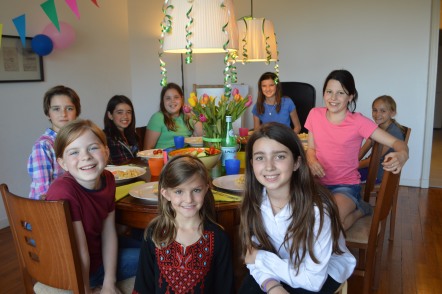
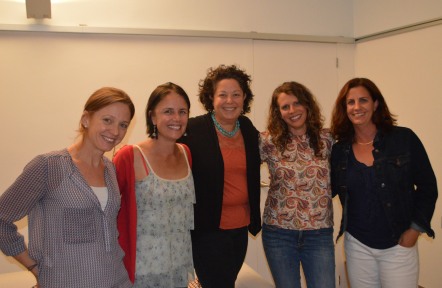
Julie Nelson, Amanda Yoemans, Suzanne Swift, Sandy Brine, Evelyn
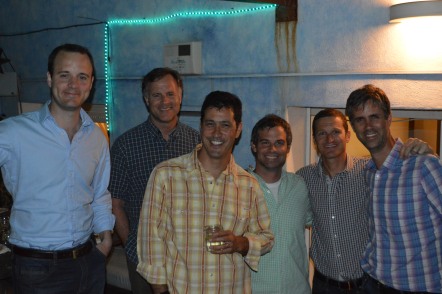
Richard Yoemans, Kevin Hobin, Tim Kunihiro, Chris Brine, Mike Swift
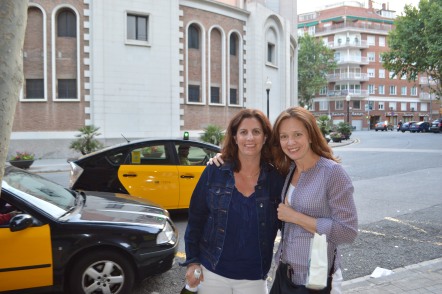
Evelyn and Julie Nelson, at our cab stand in front of “the circle church”.
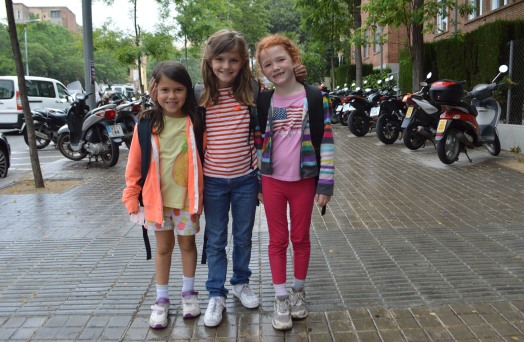
Mae Kunihiro, Maggie, Lexi Nelson
Gaudí (1852–1926) is everywhere in Barcelona and we did visit many of Gaudí’s structures, at least once, from Sagrada Familia to Park Güell (see earlier post), to La Pedrera (Casa Milà) to Casa Batlló. We even stopped by his hometown of Reus, but it was Sunday and the museum was closed.
According to the Barcelona tourism website, “the basic concept of using nature as the primary influences for his creativity is reflected in the use of the natural curved construction stones, twisted iron sculptures, and organic-like shapes – all of which are characteristic traits of Gaudí’s architecture.”
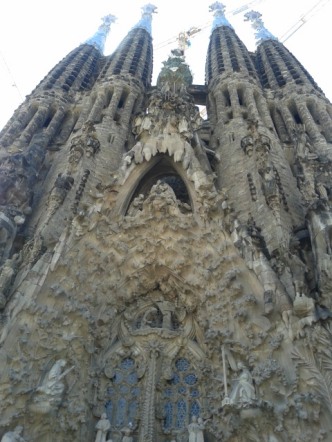 Work on La Sagrada Família commenced in 1882, and Gaudí took over the project in 1883, working until his death in 1926; at this point, completion is expected in 2026.
The kids’ audio tour is very worthwhile, as is the elevator ride to the top. However, the narrow stairway on the walk down was a bit tight for my liking!
The basement is interesting for some of Gaudí’s models as well as his burial site.
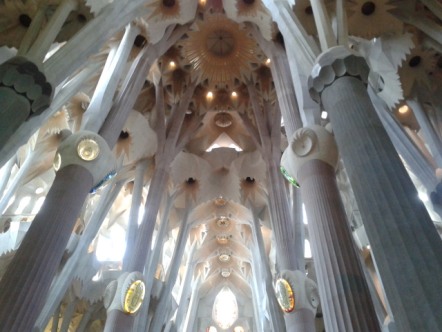
And the interior of La Sagrada Família is certainly like no church you have ever seen, or will ever see.
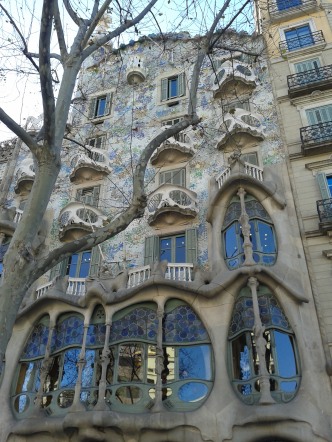
Note the balconies on Casa Batlló (built in 1904-1906), which look like skulls, and the pillars, resembling bones; inspired by marine life, the colors on the facade are found in coral.
Looking down at Passeig de Gràcia from the first floor…

Gaudí’s ability to capture natural light was amazing, shown here in a beautifully colored lightwell inside Casa Batlló, as well as in the building’s top floor hallway.
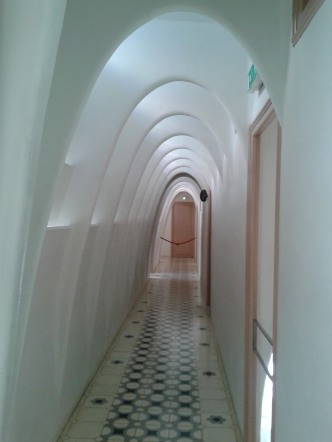
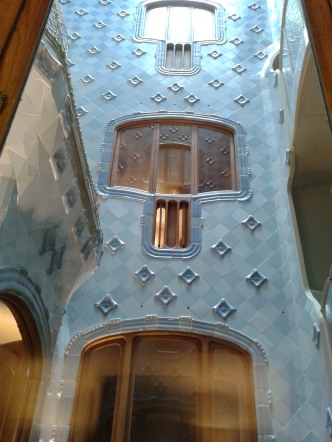
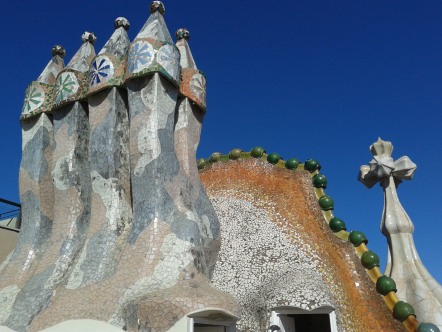
Note the dragon’s back on the roof, as well as the unique chimneys with the same tiles that are on the facade…
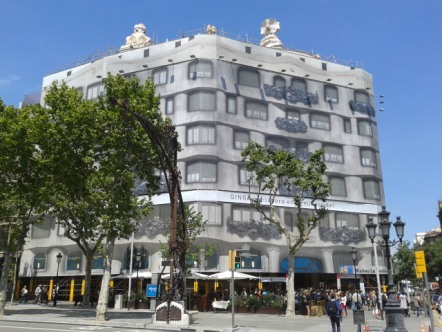
Just up Passeig de Gràcia, I found La Pedrera (Casa Milà) to be less impressive than Casa Batlló; it didn’t help that the exterior was covered up by a renovation project during much of our Barcelona year. This photo doesn’t look real, but it is.
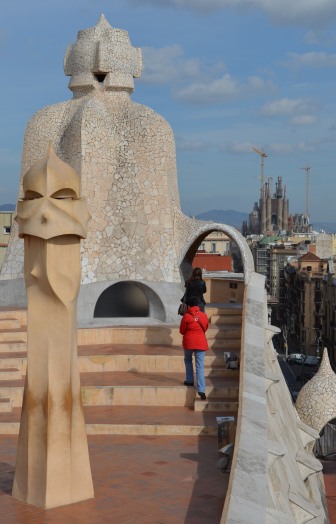
La Pedrera, meaning “the quarry”, as apparently the facade has some related resemblance, was built between 1906 and 1912. I found the roof to be the best part, with its interesting chimneys and view of La Sagrada Família.
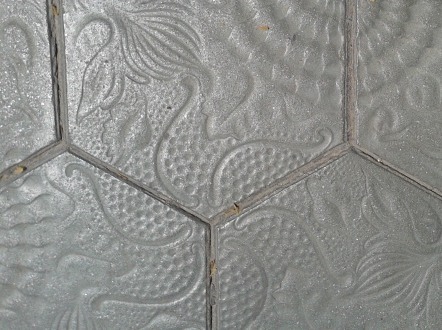
Finally, let’s not forget the hexagonal sidewalk tiles along Passeig de Gràcia, reproductions of original tiles designed by Gaudí in 1904; another example of Gaudí’s focus on nature.
Jul 11th, 2014 by willmarks
After breakfast on June 27, we said goodbye to the Freya and crew and drove about 180 kilometers to Ephesus. I am not sure we had ever experienced heat like this, 40-41 degrees (104-106 fahrenheit) so the 2 hour walk through Ephesus was a challenge, for children and adults alike.
Ephesus was an ancient Greek city, built in the 10th century B.C., and it became an important Roman city beginning in the 2nd century A.D. before earthquakes eventually inhibited the city’s access to water.
We entered from the top of Ephesus, and visited the Odeon Theater, where government sessions took place, and then saw what was left of the Temple of Hadrian.
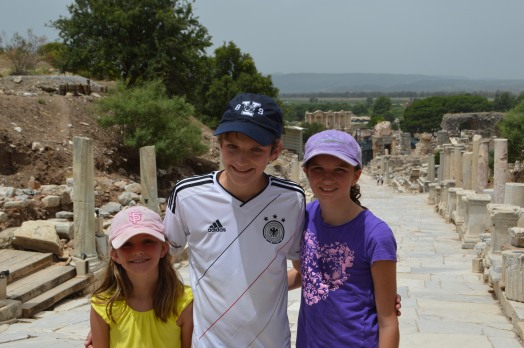
MEM with the library in the distance…
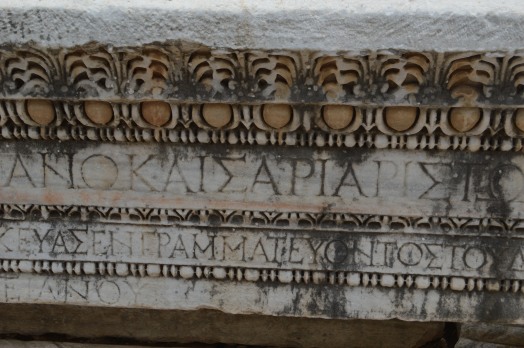
Can you find Caesar in the Greek alphabet?
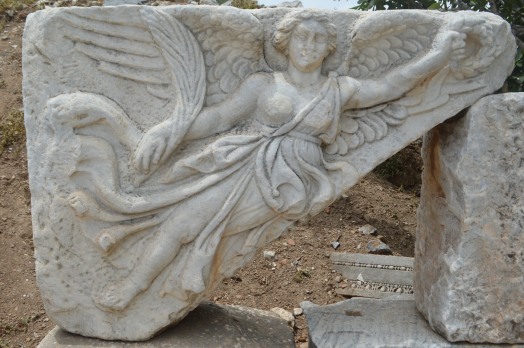
Look for the swish in this depiction of Nike, The Winged Goddess of Victory?
We partially escaped from the heat when we walked up the 90 steps within the Terrace Houses, the villas where the wealthy Ephesus residents lived and where substantial archaeological work is now taking place.
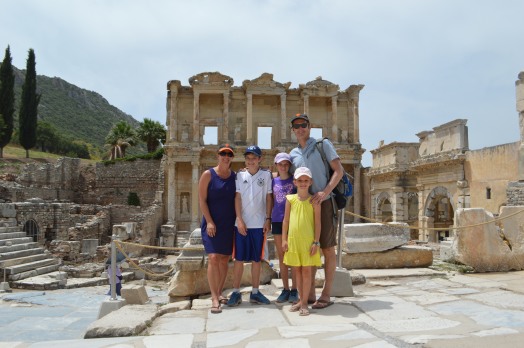
We are standing in front of the spectacular Celsus Library, built in honor of Roman Senator Tiberius Julius Celsus Polemaenus by his son in the early 2nd century A.D.
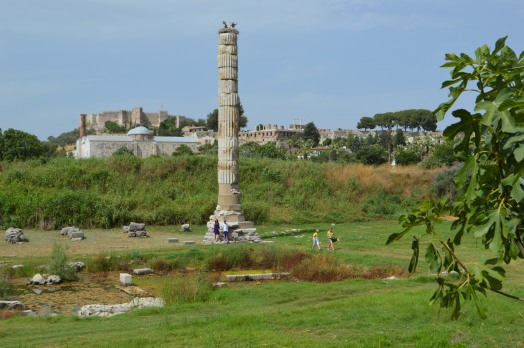
After stopping briefly at the Great Theater, which had capacity for 25,000, we made our way to lunch in nearby Selçuk, followed by a quick stop at the Temple of Artemis, or what is left of this “Wonder of the World”.
Evelyn and Max at the base of the Temple column
The drive to the Izmir airport was 80 kilometers, and then Pegasus Air took us to Sabiha Gökçen Airport in Istanbul with a second leg to Kayseri. Our new guide, Erkut Aldeniz (and driver), led us 70 kilometers to our cave hotel, Yunak Evleri, in Ürgüp, within the historical region of Cappadocia.
We were up at 4:15 a.m. for a flight with Royal Balloon.
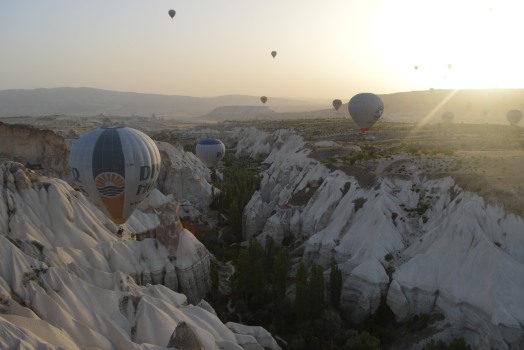
Erkut met us back at our hotel, and we drove to Devrent, where we looked out over a gorgeous valley, dropped down to Pasabag, and rode on to Göreme.
According to the UNESCO website, which points to “monastic activity” in the region beginning in the 4th century A.D., this area is “within a volcanic landscape sculpted by erosion to form a succession of mountain ridges, valleys and pinnacles known as “fairy chimneys” or hoodoos…the density of its rock-hewn cells, churches, troglodyte villages and subterranean cities within the rock formations make it one of the world’s most striking and largest cave-dwelling complexes. Though interesting from a geological and ethnological point of view, the incomparable beauty of the decor of the Christian sanctuaries makes Cappadocia one of the leading examples of the post-iconoclastic Byzantine art period.”
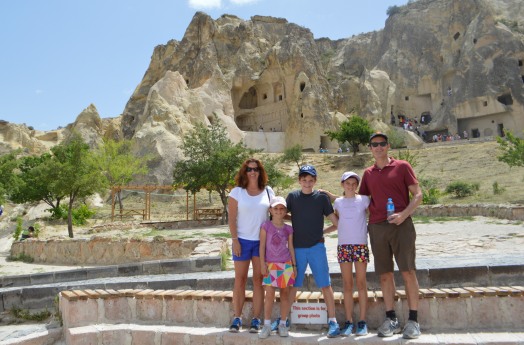
Here we are within the Göreme Open-Air Museum, a “vast monastic complex” of churches built into the rocks between the 10th and 12th centuries A.D. Note the sign between Max’s legs.
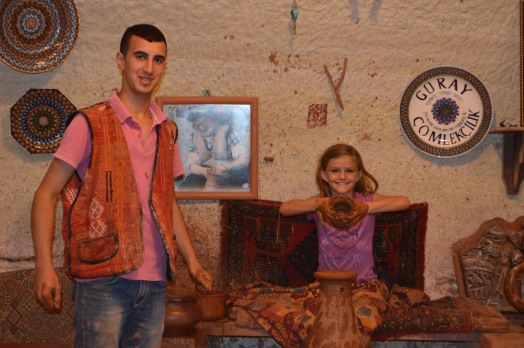
In Avanos, we visited a pottery business where MEM were given a quick lesson, and we watched some local artisans at work, before choosing not to make any purchases, likely a good move.
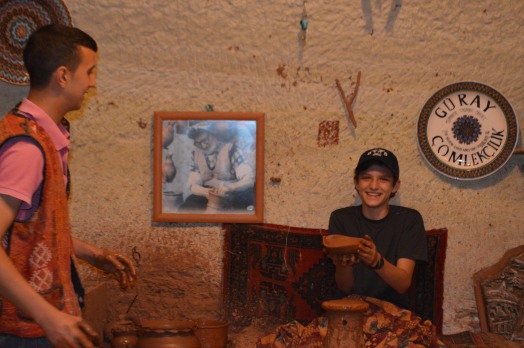
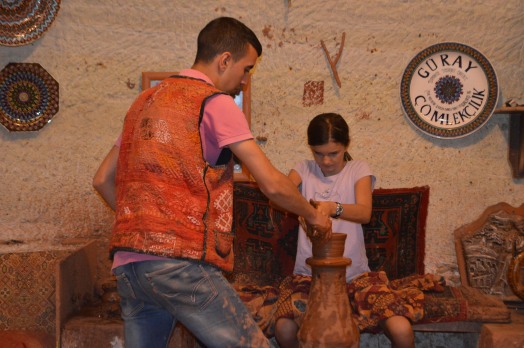
After a tasty lunch at Sedef Restaurant, we went down into the Kaymakli Underground City. Excavation of the city may have begun during the Hittite times, possibly as early as 1600 B.C. and the current structure, which included further carving by Christians, indicates peak capacity may have been in the neighborhood of 3,500.
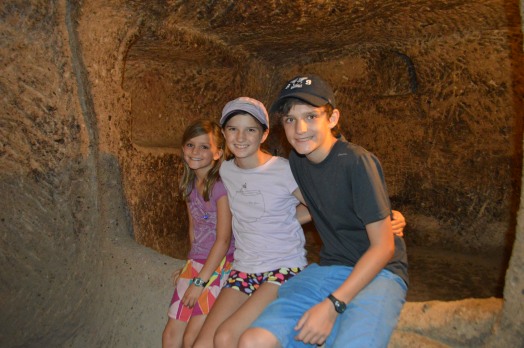
Does the look on my face say, “she’s cute and fun, but oh is she going to be a handful someday…”
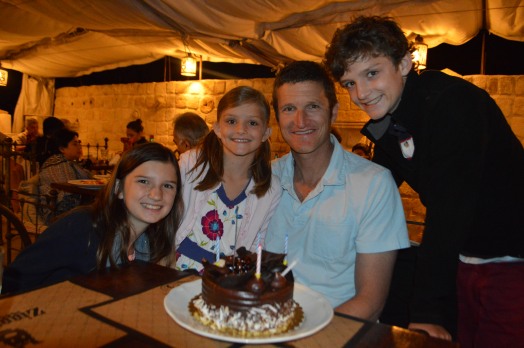
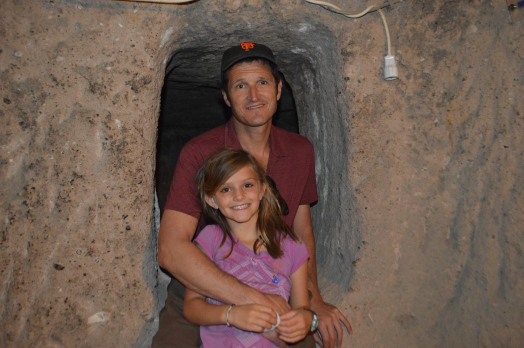 I was surprised with a birthday cake at the delightful Ziggy Cafe & Restaurant!
On our last full day in Turkey, we took a guided bike ride with a required support truck in tow; the presence of the trailing mechanic was a bit much, but it made us feel safe while pedaling up the highway portion of a not so scenic but still enjoyable tour.
Finally, we closed out at the Keslik Monastery, from the Byzantine era. Here is where meals were served…
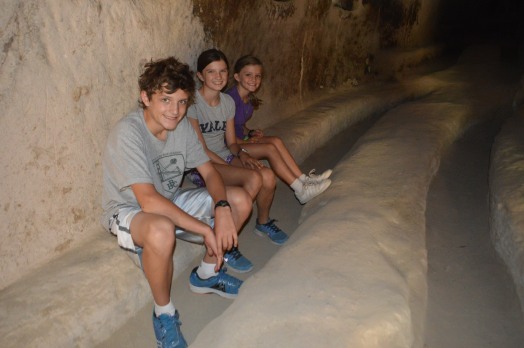
After paying for a swim at a hotel up the road, we dined at Han Çiragan Restaurant & Cafe (we preferred the prior night’s Ziggy) and sadly watched Netherlands score late and twice to defeat Mexico 2-1.
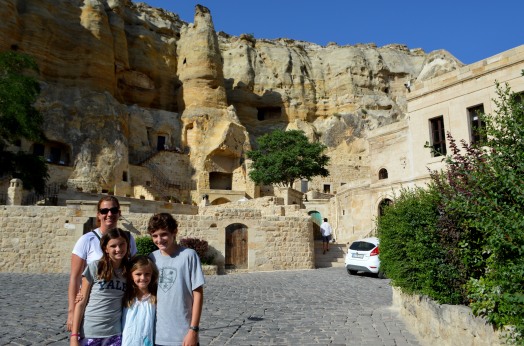
In front of our cave hotel…

MPC Press International
An independent boutique publisher, founded in San Francisco in 1990.
